Top 5 Facts You Need to Know About Steel Of Iron Production
The steel and iron production industry is a cornerstone of modern manufacturing and infrastructure development, contributing significantly to global economic growth. According to the World Steel Association's reports, global steel production reached approximately 1.9 billion metric tons in 2022, illustrating the ever-increasing demand for this essential material. As we approach 2025, the evolving landscape of "Steel Of Iron" production presents both challenges and opportunities for industry stakeholders.
Renowned industry expert Dr. Emily Carter, a leading analyst at the International Iron and Steel Institute, emphasizes the importance of innovation in this sector: "The future of Steel Of Iron production lies in sustainable practices and advanced technologies that can enhance efficiency and reduce carbon footprints."
This statement underscores the urgency for manufacturers to adopt greener methodologies in response to environmental concerns and regulatory pressures.
As we delve into the top five facts about "Steel Of Iron" production, understanding these critical elements will not only equip businesses with the knowledge to navigate the changing market but also enable them to leverage opportunities that arise with advancements in technology and sustainability initiatives.
Essential Steps in the Iron and Steel Production Process
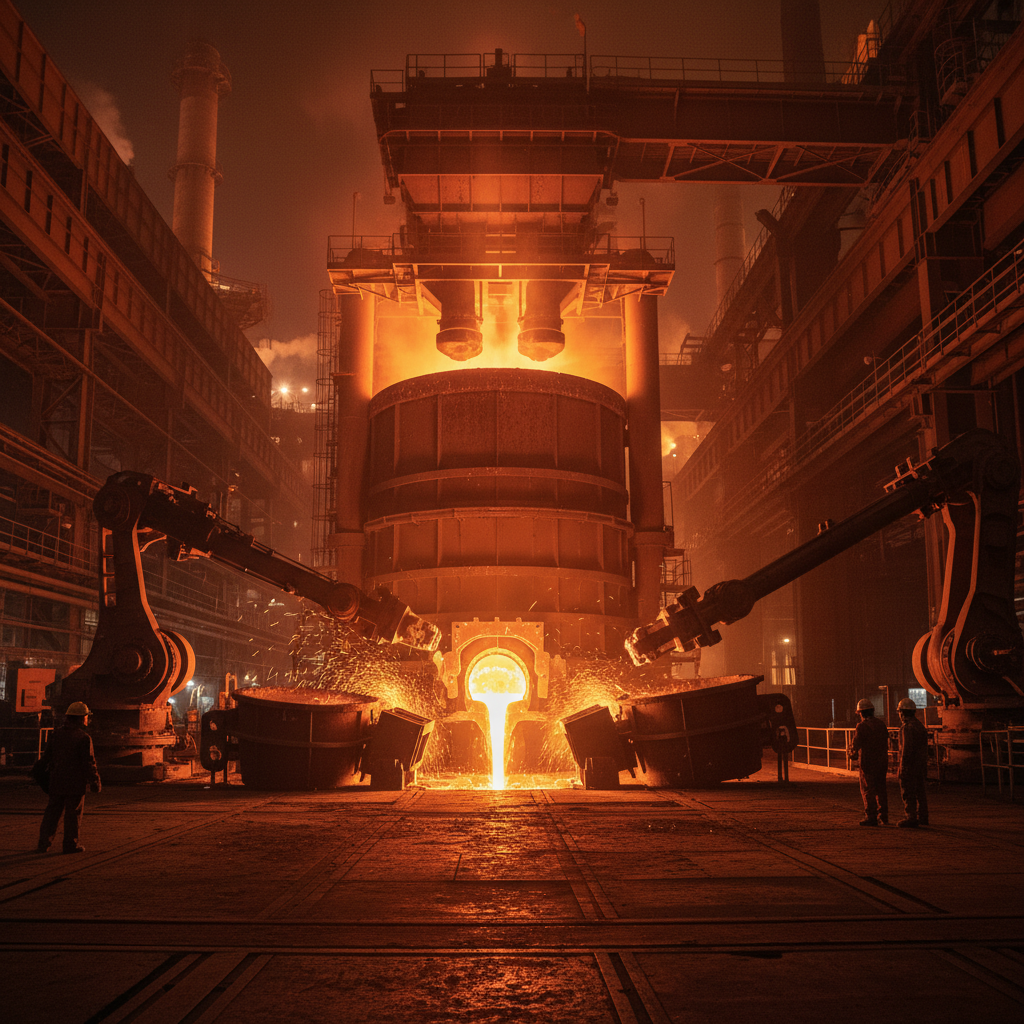
The iron and steel production process involves several essential steps that are crucial to transforming raw materials into high-quality metal products. The journey begins with the extraction of iron ore, which is then crushed and processed to separate iron from impurities. This raw iron, referred to as pig iron, is produced in a blast furnace, where iron ore is combined with coke and limestone at high temperatures. The result is molten iron, ready for further refining.
Once the pig iron is obtained, it undergoes a refining process to reduce carbon content and eliminate other impurities. This is usually achieved through basic oxygen steelmaking, where oxygen is blown into the molten pig iron to facilitate oxidation. The refined product can then be alloyed with various elements to enhance properties such as strength and durability. Finally, the molten steel is cast into different shapes and forms, making it suitable for a wide range of applications in construction, manufacturing, and other industries. Each of these steps plays an indispensable role in ensuring that the final steel products meet the necessary quality and specifications.
Key Raw Materials Used in Steel Production and Their Importance
Steel production is heavily reliant on a few key raw materials, each playing a critical role in the overall process. The primary ingredients include iron ore, coal, and limestone. According to the World Steel Association, approximately 1.5 billion tonnes of iron ore are produced globally each year, with Australia and Brazil being the leading exporters. Iron ore is essential as it is the primary source of iron, which is the core component of steel.
Coal, specifically coking coal, is another vital material in steel production. It is used in the smelting process to convert iron ore into liquid iron. The International Energy Agency (IEA) reported that steelmaking accounts for around 7% of global carbon dioxide emissions, largely due to the use of coal. Therefore, the shift towards using alternative materials or processes, such as direct reduced iron (DRI) and electric arc furnaces, is becoming increasingly important in mitigating environmental impacts. Furthermore, limestone is added as a flux, helping to remove impurities during smelting. This trio of raw materials not only defines the quality of steel produced but also influences its cost and environmental footprint.
Environmental Impact and Sustainable Practices in Steel Manufacturing
The environmental impact of steel production is a pressing issue, as the sector is responsible for approximately 8% of global carbon emissions. To tackle this challenge, the implementation of green metallurgy principles is paramount. This approach focuses on integrating sustainable technologies and enhancing recycling processes, aimed at minimizing the ecological footprint of steel manufacturing. As industries shift towards more sustainable practices, the emphasis on decarbonization becomes crucial. Innovations such as hydrogen-based solutions and digital collaboration can significantly reduce greenhouse gas emissions, paving the way for a greener industry.
Countries are actively engaging with sustainable practices to meet their climate goals. For instance, as Bangladesh works towards its 2030 Nationally Determined Contributions (NDC), the steel industry is called to balance growth with environmental responsibility. Additionally, research initiatives at educational institutions are fostering advancements in engineering and sustainability, developing solutions to major environmental challenges. The circular economy approach in construction, which focuses on reducing waste and enhancing resource efficiency, further underscores the importance of adopting sustainable materials and methods in the steel industry, aiming to create a more sustainable built environment.
Innovations and Technologies Transforming Iron and Steel Production
The iron and steel production industry has seen remarkable innovations and technologies that have transformed traditional processes into more efficient and sustainable practices. One of the most significant advancements is the development of Electric Arc Furnaces (EAFs). Unlike conventional blast furnaces, EAFs utilize recycled scrap metal as the primary raw material, significantly reducing energy consumption and carbon emissions. This shift not only optimizes resource use but also aligns with global sustainability goals, making steel production greener.
Another breakthrough is the introduction of digital technologies, such as Artificial Intelligence (AI) and the Internet of Things (IoT). These technologies facilitate real-time monitoring and data analysis, leading to improved decision-making in production processes. By leveraging data analytics, manufacturers can predict equipment failures, optimize energy usage, and enhance overall operational efficiency. Furthermore, automated systems are increasingly being integrated into production lines, minimizing human error and increasing safety in the workplace. These innovations collectively point toward a future where iron and steel production is not only more efficient but also more environmentally responsible.
Top 5 Innovations in Iron and Steel Production
This chart illustrates the efficiency improvements in iron and steel production technologies over recent years.
Global Leaders in Iron and Steel Production: A Comparative Overview
The global landscape of iron and steel production is shifting dramatically, with notable changes in leadership and geographical focus. Historically concentrated in Europe and the Americas, substantial investments in green steel projects are now increasingly flowing into Asia. This shift is indicative of a broader commitment to sustainability within the industry, as companies aim to reduce their carbon footprint and adopt more environmentally friendly practices. The Leadership Group for Industry Transition's updated Green Steel Tracker provides crucial insights into this evolving sector, highlighting the growing importance of sustainable practices in production processes.
In terms of market dynamics, the demand for both iron ore and steel scrap plays a vital role in shaping industry trends. Reports indicate that the global iron ore market remains one of the most critical sectors, directly influencing steel production capacities worldwide. As countries like Afghanistan prepare to harness their significant iron ore deposits, the potential for economic transformation and regional development becomes evident. Meanwhile, leading producers are adapting to changing market conditions, as the forecast suggests a slowdown in global iron production in the coming decade, prompting an urgent need for innovation and efficiency in production methods.
Top 5 Facts You Need to Know About Steel Of Iron Production
| Fact |
Details |
| Global Production Volume |
Around 1.9 billion metric tons of crude steel produced worldwide in 2022. |
| Top Producing Countries |
Countries like China, India, and the USA account for more than 70% of global production. |
| Energy Intensity |
Producing one ton of steel typically requires 20-30 GJ of energy. |
| Recycling Rates |
Approximately 85% of steel is recycled after its first use, making it one of the most recycled materials. |
| Environmental Impact |
Steel production accounts for about 7% of total greenhouse gas emissions globally. |